
Why Red Light Therapy at Home is Becoming a Modern Wellness Routine
Why Red Light Therapy at Home is Becoming a Modern Wellness Routine
There was a time when red light therapy sounded like something you would only encounter in a dermatologist’s office, a sports medicine clinic, or a particularly futuristic spa.
Now, it is showing up in people’s homes.
Red light panels are standing in bedrooms. LED masks are finding a place next to skincare products. Handheld devices are being used while people answer emails, watch television or wind down at night. What once seemed like an obscure piece of wellness technology has increasingly become part of the everyday routine.
The reason is fairly simple: people are looking for wellness practices that don’t require completely rearranging their lives.
But convenience alone doesn’t explain the staying power of red light therapy. The more interesting question is whether there is enough science behind the technology to justify making it part of a regular routine.
The answer, according to a growing body of research, is more nuanced than either extreme. Photobiomodulation, the scientific term commonly used for red and near-infrared light therapy, has been studied for a range of applications, including skin concerns, wound healing, pain and hair loss. A 2025 evidence-based consensus developed by an international multidisciplinary panel found clinical support for several medical applications while emphasizing the importance of using appropriate protocols and recognizing where more research is needed. 2025 evidence based consensus on the clinical application of photobiomodulation
That makes red light therapy less of a miracle cure and more of an emerging wellness tool. And that distinction matters.
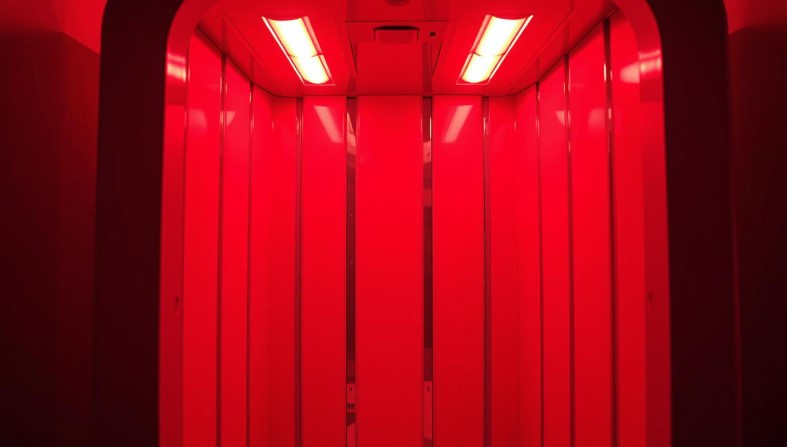
What Exactly Is Red Light Therapy?
Red light therapy uses specific wavelengths of light to interact with biological tissue. Depending on the device, treatment may involve red light, near-infrared light, or both.
Common red light therapy wavelengths
- 630 nm: Red light commonly used for more surface-level applications involving the skin.
- 660 nm: One of the most widely used red wavelengths in photobiomodulation devices and research.
- 810 nm: Near-infrared light that penetrates deeper into tissue than visible red wavelengths.
- 830 nm: Another commonly studied near-infrared wavelength used in photobiomodulation research.
- 850 nm: A popular near-infrared wavelength in consumer red light therapy panels, particularly when deeper tissue exposure is desired.
Unlike ultraviolet light, which can damage skin with excessive exposure, red and near-infrared wavelengths are used in photobiomodulation because they interact with cells in different ways.
The proposed mechanisms are complex, but research has focused heavily on how light may influence cellular energy production and signaling pathways involved in processes such as inflammation, tissue repair, and cellular function.
That doesn’t mean shining a red light on yourself automatically produces a measurable health benefit.
The details matter: wavelength, irradiance, treatment duration, distance from the device, and the specific condition being treated can all influence the outcome.
In other words, “red light” isn’t a single standardized treatment.
Two devices can both be marketed as red light therapy while delivering very different amounts and wavelengths of light.
That’s one reason consumers should look beyond the color of the bulbs when evaluating a device.
The type of red light therapy devices can also affect how those wavelengths are delivered and how much of the body can be treated at once.
Why do red light therapy at home?
The biggest change may have less to do with the technology itself and more to do with accessibility.
Professional photobiomodulation treatments can require appointments, travel, and repeated visits. Home devices offer a different model: incorporate light therapy into an existing routine instead of creating an entirely new one.
A systematic review of home-use photobiomodulation devices found that at-home devices had been studied for several applications, including pain, wound healing and other conditions, with many studies reporting positive outcomes. At the same time, the researchers noted that
additional randomized controlled trials were needed to establish efficacy more conclusively. Systematic review of home-use photobiomodulation devices
That combination of accessibility and repeated use is important.
Wellness routines tend to survive when they’re easy enough to repeat.
Nobody wants another 14-step ritual that requires a spreadsheet, three appointments, and an uninterrupted Saturday afternoon.
A few minutes of light exposure at home is a much easier proposition.
How often should you do red light therapy at home?
There is no single treatment schedule that applies to every red light therapy device or every goal. Research protocols vary depending on the wavelength, irradiance, treatment area, treatment duration, and condition being studied.
At-home devices may be used several times per week, while some manufacturers recommend more frequent sessions depending on the device and intended use. More exposure is not automatically better. The appropriate schedule depends on how much light the device delivers and how long each area is exposed.
This is why users should follow the treatment guidance provided for their specific device rather than assuming that every red light therapy panel should be used for the same amount of time or at the same frequency.
How to create a red light therapy routine
There is another reason red light therapy fits modern wellness so naturally: it can become a ritual rather than another chore.
Think about the habits people already associate with taking care of themselves. Morning coffee.
A nighttime skincare routine.
Stretching before bed.
A walk after dinner.
Reading for 20 minutes before turning off the lights.
These habits aren’t necessarily dramatic. Their value comes from repetition.
Red light therapy can occupy a similar space.
Someone might use a device after washing their face in the evening. Another person might incorporate it into a morning routine before getting ready for work. Someone else might use it while listening to a podcast.

The technology becomes less about chasing an instant transformation and more about consistently making time for a particular wellness practice.
That distinction is particularly relevant in an industry where consumers are constantly being promised the next breakthrough.
People are increasingly interested in routines they can actually maintain.
Does red light therapy work?
This is where skepticism is healthy.
Red light therapy has accumulated a substantial research base, but the evidence isn’t equally strong for every claim attached to the technology.
A 2025 umbrella review examined 15 meta-analyses covering 204 randomized controlled trials and more than 9,000 participants across a wide range of health outcomes. The researchers found evidence of potential benefits across several conditions, but the strength of evidence varied depending on the outcome being studied. 2025 umbrella review of photobiomodulation research
That’s a much more useful way to think about red light therapy than asking whether it “works.” Works for what?
At what wavelength?
At what dose?
For how long?
Compared with what?
Those questions matter because photobiomodulation isn’t one treatment for one condition.
For example, research into at-home LED devices for acne has found promising results. A recent systematic review and meta-analysis covering six studies and 216 participants found that at home red and/or blue LED devices were associated with reductions in inflammatory and noninflammatory acne lesions, with generally favorable adverse-effect profiles. Systematic review and meta-analysis of at-home LED devices for acne
That’s meaningful.
But it doesn’t mean every red light device will produce the same result for every person.
Consistency May Matter More Than Intensity
One of the more interesting things about at-home red light therapy is that it fits into a broader shift in how people approach wellness.
The goal isn’t necessarily to do the most extreme thing possible.
It’s to find something sustainable.
A person may be more likely to stick with a five- or 10-minute routine they can perform at home than a treatment that requires driving across town every week.
And repeated use is particularly relevant to photobiomodulation because many studied protocols involve multiple treatment sessions rather than one dramatic exposure.
That doesn’t mean more is better.
It means following the manufacturer’s instructions and the protocol appropriate for the intended use matters.
The technology may be passive compared with exercise, but it isn’t completely passive from a consumer standpoint. Device specifications and treatment parameters still matter.
Is red light therapy the same as sunlight?
It is also worth clearing up a common misconception.
Red light therapy is not simply “getting sunlight without the sun.”
Sunlight contains a broad spectrum of electromagnetic radiation, including ultraviolet radiation. Photobiomodulation devices are designed to deliver specific wavelengths within controlled parameters.
That distinction is one reason red light therapy has attracted attention in the first place.
It allows researchers to study particular wavelengths and doses rather than treating sunlight as one giant variable.
At the same time, controlled exposure does not mean consumers should ignore safety instructions.
Eyes, skin sensitivity, medications, and specific medical conditions can all be relevant depending on the device and intended use. The 2025 clinical consensus on photobiomodulation specifically addressed safe and effective application and emphasized evidence-based protocols rather than treating PBM as a one-size-fits-all intervention. Evidence-based clinical consensus on photobiomodulation
The New Wellness Luxury: Something You’ll Actually Use
There is a funny contradiction in modern wellness.
Consumers have access to more health technology than ever, yet the most useful products may be the ones that don’t demand much from them.
A device can have impressive specifications, but if it spends most of its life in a closet, those specifications don’t mean much.
That’s where at-home red light therapy has an interesting advantage.
It can be relatively easy to incorporate into an existing routine.
And unlike some wellness trends that depend on novelty, photobiomodulation is being studied across multiple fields of medicine and health. Researchers are still working to determine which applications have the strongest evidence, but the technology is no longer simply a fringe curiosity.
That doesn’t make every claim surrounding red light therapy legitimate.
It makes it worth paying attention to the actual evidence.
So, Should Red Light Therapy Become Part of Your Routine?
Maybe.
But the better question isn’t whether red light therapy is the next miracle of wellness. It isn’t.
The better question is whether there is a legitimate reason to incorporate a properly designed device into your personal routine, based on what you’re trying to accomplish and what the evidence currently supports.
For some people, the answer may be skincare. For others, it may be recovery or another specific application that has been studied.
For someone else, it may simply be the appeal of having a quiet, technology-assisted moment built into the day.
That’s perhaps the most interesting evolution in at-home wellness.
People aren’t necessarily looking for another complicated health regimen. They’re looking for rituals that fit into real life.
Red light therapy may have started as a clinical technology, but its future may be much more ordinary: sitting at home, turning on a device, taking a few minutes for yourself, and then getting on with your day.
Not because it promises to fix everything.
Because the things we actually keep doing tend to matter more than the things we try once.
Consumers who want to dig deeper can learn more about how to choose a red light therapy device based on factors such as wavelength, irradiance, coverage and intended use.
Disclaimer: This article is for informational and educational purposes only and is not intended to provide medical advice, diagnosis, or treatment. Red light therapy should not be considered a substitute for professional medical care. Red light therapy itself is not FDA-approved as a treatment for any specific disease or medical condition, although individual red light therapy devices may be FDA-cleared for specific intended uses. Always consult a qualified healthcare professional with questions about a medical condition or before beginning a new treatment.