
Why Balance Training Deserves More Attention in Strength Programs
Why Balance Training Deserves More Attention in Strength Programs
Most people train to get stronger. Almost nobody trains to stay upright.
That’s a problem.
Walk into any gym. Squat racks are full. Benches are lined with people. People are everywhere lifting dumbbells. Yet you will not see one person standing on one leg, eyes closed simply practicing the one skill that will keep them upright.
Let’s look at the statistics. According to the CDC, falls impact more than one in four seniors annually and if you fall once, you are twice as likely to fall again.
Here’s the good news:
Balance adapts to training. It improves with training just like a bench press. It just deserves a place on the program.
What’s covered below:
- Why Balance Is A Trained Skill
- The Three Systems Keeping You Upright
- Why Strength Programs Skip Balance Work
- How To Add Balance Training To Any Program
Balance Is A Skill, Not A Gift
Balance gets treated like eye colour. You either have it or you don’t.
That’s not how it works.
Balance is a motor skill your nervous system learns through repetition. It is quickly lost when you stop training it. Your body maintains its upright posture through three different systems.
- The inner ear — tells the brain which way is up
- Body position sense — feedback coming from joints, muscles and feet
- The eyes — give the brain a stable reference point for the world
Most programs only ever train the second one. The third piece falls by the wayside completely, and this is where it gets fun. When your eyes send your brain two images that aren’t quite lined up — a disorder known as binocular vision dysfunction — it takes energy for your brain to force those images into convergence. Symptoms rarely manifest as an “eye problem.” Patients come in complaining of dizziness, motion sickness, unexplained head tilt, and a peculiar unsteadiness when going up and down stairs. Practitioners trained in NeuroVisual Medicine test for these subtle misalignments, and once they are corrected, balance complaints that were blamed on the inner ear for years often clear up. Binocular vision dysfunction isn’t caused by weight training, but it can be the reason why some lifters are constantly unsteady despite their rigorous single-leg workouts.
Balance requires teamwork. A weak link in that chain reveals itself through instability.
Why Strength Programs Leave Balance Out
Ask your coach why balance training isn’t part of your program and you’re likely to hear a painfully honest response:
It doesn’t feel like progress.
Strength training is quantifiable. You add 2.5kg to the bar and see improvement right before your eyes. Balance has no PR. No one posts a video of themselves standing still. There’s no leaderboard, so it silently gets dropped from the plan never to return.
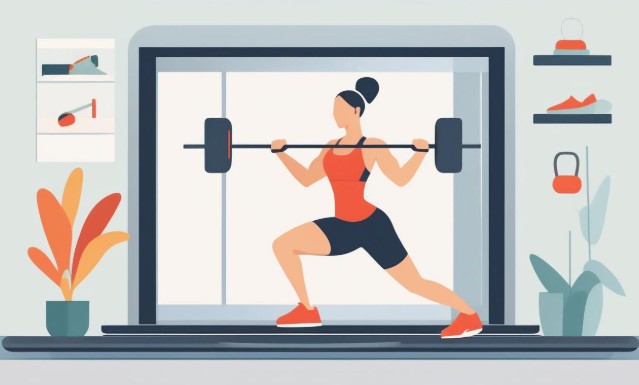
Reason number two is based on a persistent myth. Many lifters think that balance is covered by heavy compound movements. After all squats and deadlifts are plenty tough already. They are tough, but they work the body in a very standardized way. They build the muscles you need to right yourself. But everything happens while you’re standing on two feet, on level ground, never deviating from a straight line. Life doesn’t work that way.
Real life is:
- Uneven ground and loose gravel
- Stepping off a kerb in poor light
- Turning your head while walking
- Carrying something heavy in one hand
- Reacting to a slip you never saw coming
None of that exists in a regular strength program. And the difference between what you train and what actually occurs is where injuries reside.
What Poor Balance Really Costs
Balance issues are far more prevalent than most people realize. One analysis of national survey data showed that 36.8 million American adults experienced a dizziness or balance problem within a single year, a sharp increase from eight years prior. That’s not just a bunch of frail elderly people. That’s a gigantic segment of the population. And it includes plenty of folks who exercise regularly.
And here’s the part that stings…
Studies demonstrate that dedicated lower-body strength and balance training performed approximately three times per week reduces fall incidence by nearly one-third. It’s not a pill. It’s not a piece of equipment. It’s doing the work.
Loss of balance costs you at the gym as well. If you can’t balance properly on one leg, as a lifter you will:
- Leak force during heavy lifts
- Compensate with the stronger side without noticing
- Build side-to-side imbalances over time
- Lose confidence under heavier loads
Every one of those problems gets worse the longer they’re ignored.
How To Add Balance Training To Any Program
The best thing about balance training is how low maintenance it is. It requires no equipment, very little time, and can be added to an existing successful program.
Here’s how to do it properly.
Start Every Session Standing On One Leg
Warm up by standing on one leg for 30 seconds each leg before attempting your first working set. If that’s not difficult, shut one eye. Now shut both. As soon as vision is eliminated, your inner ear and proprioception must pick up the slack and most people find they are much less balanced than they realize.
Slow Down The Tempo
Perform a basic split squat or step-up but lower yourself for a count of three seconds. This will teach small stabilising muscles to work properly by taking the momentum out of the exercise.
Add Head And Eye Movement
Balance deteriorates quickest when moving your head. Practice slowly rotating your head while holding a single-leg stance, or watch a still spot on the wall while stepping laterally.

This drill is probably the one most people don’t do. It’s also the one that translates to the street the best. Walking down the street you naturally move your head a lot, practicing that connection will show.
Carry Heavy Things
Suitcase carries are essentially balance training masquerading as strength training. Having one side of your body loaded challenges your trunk to stabilize against falling forward/backward with each step.
30 metres per side x 2 sets at the end of a session is more than enough. Builds grip, core strength and stability simultaneously.
Train Reactions, Not Just Positions
Holding positions is beneficial. Getting up off a fall is more beneficial. Little hops on one leg with two second stick, or having a training partner lightly poke you while holding a single leg, teaches your body to self-correct.
Start conservatively here. The goal is controlled surprise, not chaos.
Bringing It All Together
Balance training is by far the cheapest insurance policy you can buy in any strength program. Five minutes, no equipment, and it protects everything else you work on.
To recap the essentials:
- Balance is a trainable skill that fades without practice
- Three systems keep the body upright, including vision
- Heavy compound lifts alone won’t cover it
- Five minutes per session is enough to see change
Strength will keep you strong. Mobility will keep you upright. If your program is only training one of them it’s only half of a complete program, and the half you’re missing always seems to matter most when you least expect it.