
The Role of the 45-Degree Leg Press in Serious Lower-Body Training
The Role of the 45-Degree Leg Press in Serious Lower-Body Training
Lower-body training often centers on squats and deadlifts.
Those lifts deserve their place, but serious programming rarely depends on one movement pattern alone. Intelligent strength development requires tools that allow targeted overload without unnecessary fatigue.
The 45-degree leg press remains one of the most misunderstood machines in the weight room. It is often dismissed as secondary work. In reality, when used correctly, it becomes a strategic driver of hypertrophy and controlled progression.
Rather than replacing compound barbell lifts, the 45-degree platform complements them.
It allows athletes to accumulate meaningful quad and glute volume while managing spinal stress. In structured programs, that balance matters.
Understanding the Mechanics of the 45-Degree Leg Press
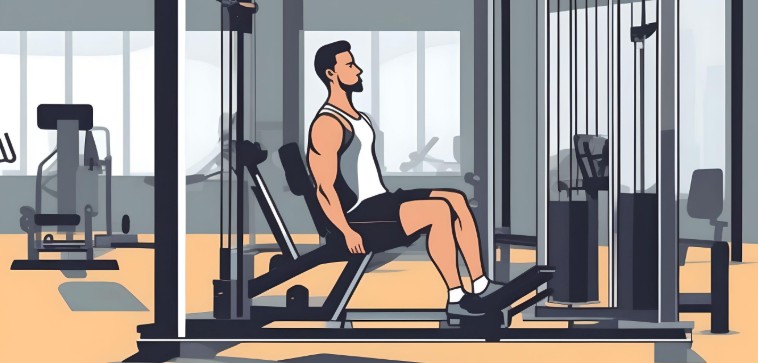
The 45-degree leg press uses an angled sled that shifts force along a guided track.
Unlike vertical or horizontal presses, this angle changes how resistance loads the hips and knees.
- The result is a movement that blends hip extension and knee extension under stable support.
- During the eccentric phase, the hips flex while the knees track forward under load.
- The back remains supported against a fixed pad, reducing the axial compression seen in barbell squats. This supported position limits spinal shear while preserving heavy lower-body stimulus.
- Because the sled follows a fixed path, stabilization demands are significantly lower than in free-weight squats. That reduction allows athletes to concentrate force through knee extension.
Quad recruitment becomes easier to isolate when balance is no longer the limiting factor.
The controlled track also improves repeatability between sessions. Foot placement can be adjusted precisely to emphasize different regions of the lower body. Small positional changes translate into measurable differences in muscle bias.
Why Build Quality Matters in Heavy Leg Press Training
Machine design directly influences training output. Under heavy loads, poor alignment, or inconsistent sled travel creates friction and instability.
That inconsistency alters resistance and reduces the quality of each repetition.
Linear bearing systems provide smoother carriage motion than basic roller tracks. Reduced friction means resistance remains consistent from bottom position to lockout. When pushing maximal sets, that mechanical reliability becomes critical.
Frame rigidity also matters. Thicker gauge steel and reinforced welds prevent flex under high plate loads. A well-built unit maintains structural alignment, even when athletes load it aggressively across repeated sessions.
High-capacity commercial models demonstrate how design impacts progression. The 45 degree leg press machine from French Fitness illustrates this approach, using a reinforced frame and linear guide system engineered to maintain sled stability under substantial load.
When equipment supports heavy progression without mechanical compromise, athletes can focus purely on force production. Structural integrity is not a luxury in serious training. It is foundational.
Hypertrophy Advantages of the 45-Degree Platform
Mechanical tension drives muscle growth.
- The leg press allows athletes to generate high tension while minimizing balance constraints.
- That combination enables harder sets taken closer to muscular failure.
With reduced core fatigue, trainees can push quad-dominant volume after squats without additional spinal strain. This sequencing allows for greater accumulation of the weekly workload. Over time, that increased volume supports measurable hypertrophy.
Foot placement significantly changes muscle emphasis. A lower platform position increases knee flexion demand and shifts stress toward the quadriceps. A higher placement increases hip extension demand and engages the glutes more directly.
Tempo control is also easier on a guided sled.
Athletes can slow the eccentric phase without worrying about losing position. That controlled descent increases time under tension and improves mind-muscle connection.
Managing Fatigue in Structured Strength Cycles
Heavy squats impose axial loading that accumulates systemic fatigue.
In high-frequency programs, repeated spinal compression can limit recovery. The leg press offers a way to maintain lower-body intensity while reducing that stress.
During hypertrophy blocks, athletes often use leg presses to extend quad volume beyond primary squat work. Because the spine remains supported, recovery demands shift away from the lower back. This allows more frequent lower-body sessions.
- In deload weeks, coaches may substitute leg press work for high-intensity barbell sets.
- The movement pattern remains similar, but joint and spinal loading are moderated.
- This preserves muscle stimulus while facilitating recovery.
Athletes managing previous back issues also benefit from this structure. While no machine replaces proper movement mechanics, reducing axial load can maintain training consistency. Consistency ultimately drives long-term progress.
Carryover to Squat Performance
The leg press does not replace technical squat practice. Skill acquisition under a barbell requires coordination and stabilization that machines cannot replicate. However, targeted strength improvements can influence squat performance.
Improved quad strength supports stronger knee extension out of the bottom position. This can help lifters overcome common sticking points during ascent. Hypertrophy developed through controlled machine work often transfers to barbell strength.
Because stabilization demands are lower, athletes can accumulate more total quad work than squats alone would permit.
That added muscular development supports future strength blocks. Supplemental work builds the foundation for primary lifts.
Who Should Prioritize the 45-Degree Leg Press?
Powerlifters in hypertrophy phases can use the 45-degree leg press to drive quad growth without excessive spinal fatigue. Bodybuilders rely on it for targeted leg volume after compound lifts. Both groups benefit from its controlled overload potential.
Athletes balancing sport practice with strength training may also prioritize machine-based volume. Reduced systemic fatigue allows better recovery between sessions. Structured programming often requires this balance.
Home gym owners investing in plate-loaded equipment should consider versatility and durability.
A well-built 45-degree unit supports progressive overload for years. In serious lower-body development, longevity matters.
Strength Starts with The Right Plan
The 45-degree leg press is not a shortcut or a compromise. In structured strength training, it functions as a precise tool for managing load, volume, and fatigue. When integrated intelligently, it enhances lower-body development without replacing foundational lifts.
Serious training demands more than intensity.
It requires thoughtful selection of equipment that supports progression over time. The 45-degree platform, when engineered properly and programmed strategically, earns its place in that system.